ChevyParts
My Garage
My Account
Cart
OEM GMC Carburetor Mounting Gasket
Carburetor Gasket Kit- Select Vehicle by Model
- Select Vehicle by VIN
Select Vehicle by Model
orMake
Model
Year
Select Vehicle by VIN
For the most accurate results, select vehicle by your VIN (Vehicle Identification Number).
5 Carburetor Mounting Gaskets found

GMC Gasket Kit Part Number: 17076140
Product Specifications- Other Name: Power Carburetor Kit; Carburetor Mounting Gasket; Carburetor Repair Kit
GMC Gasket Kit Part Number: 17076133
Product Specifications- Other Name: Power Carburetor Kit; Carburetor Mounting Gasket; Carburetor Repair Kit
GMC Gasket Kit Part Number: 17076043
Product Specifications- Other Name: Power Carburetor Kit; Carburetor Repair Kit; Overhaul Kit
GMC Gasket Kit Part Number: 17076022
Product Specifications- Other Name: Power Carburetor Kit; Carburetor Repair Kit; Overhaul Kit; Overhaul Gasket Set
GMC Gasket Kit Part Number: 17076005
Product Specifications- Other Name: Power Carburetor Kit; Carburetor Mounting Gasket; Carburetor Repair Kit
GMC Carburetor Mounting Gasket
Choose OEM Carburetor Mounting Gasket, you're making the optimal decision for superior quality and perfect performance. You can feel confident because each component goes through stringent quality checks. Every part is carefully built to comply with GMC's factory specifications. You'll enjoy a smooth, worry-free installation that fits just right. At ChevyPartsGiant.com, you'll find it easy to get top-quality OEM GMC Carburetor Mounting Gasket. You can shop at highly competitive prices and protect your budget. All our genuine GMC parts include a dependable manufacturer's warranty. You'll also appreciate our straightforward return policy and swift delivery services for extra convenience.
The GMC Carburetor Mounting Gasket is applied to cover the connection between the carburetor and the intake manifold in order to make your engine draw in the correct fuel air mixture without any form of leakage. GMC builds its reputation around boxed steel frames, high torque power trains and professional grade suspensions that absorb the bumps during towing or hauling. Silent, well-insulated cabins reduce wind and road sound, surround vision cameras expand the field of the driver, and hitch directions on the initial attempt of the trailers. The ingenious MultiPro tailgate folds, steps and halts at various heights so as to have convenient access to the bed and all the GM models are subjected to severe factory tests that have demonstrated its endurance in heat, cold and mud. The Carburetor Mounting Gasket is a thin but rough coating and also prevents heat and vibration dampening both the manifold and carburetor. Installation requires cooling the engine, then unbolstering and removing the carburetor and scraping the two surfaces till shiny. Install the new gasket by sliding it over the studs with ports in complete alignment, and lowering the carburetor, then commence each nut by hand and screw them gradually in a crisscross pattern, to spec evenly spread pressure. Connect the fuel lines, vacuum hoses, and connecting piping back together, adjust throttle to ensure that it moves freely, and start engine, listen to leaks, and lastly tighten fasteners to secure an airtight seal after one complete heat cycle.
Related GMC Parts
 GMC Air Filter
 GMC Throttle Body
 GMC Carburetor
 GMC Fuel Tank
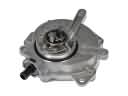 GMC Vacuum Pump
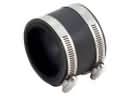 GMC Air Intake Coupling
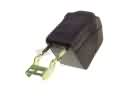 GMC Carburetor Float
 GMC Carburetor Gasket Kit
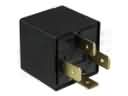 GMC Daytime Running Light Relay
 GMC Fuel Tank Strap
 GMC Idle Control Valve
 GMC Vapor Pressure Sensor