ChevyParts
My Garage
My Account
Cart
OEM Chevrolet Metro Flywheel
Clutch Flywheel- Select Vehicle by Model
- Select Vehicle by VIN
Select Vehicle by Model
orMake
Model
Year
Select Vehicle by VIN
For the most accurate results, select vehicle by your VIN (Vehicle Identification Number).
3 Flywheels found
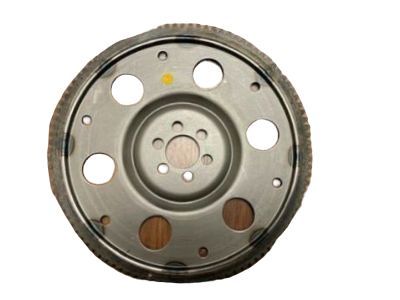
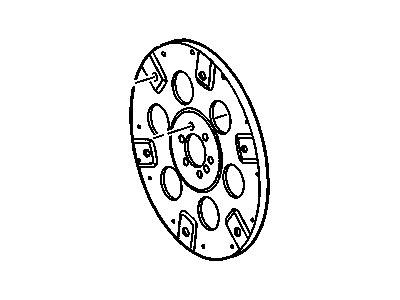
Chevrolet Metro Drive Plate Part Number: 91173838
$96.57 MSRP: $178.38You Save: $81.81 (46%)Ships in 1-2 Business DaysChevrolet Metro Flywheel Part Number: 96064507
Chevrolet Metro Flywheel Part Number: 96062035
Chevrolet Metro Flywheel
Want to cut long-term maintenance and repair costs? Choose OEM Flywheel. Those parts deliver top durability you can trust. On our site, you'll find a huge catalog of genuine Chevrolet Metro parts. Prices are unbeatable, so you can keep more in your pocket. Every OEM Chevrolet Metro Flywheel includes a manufacturer's warranty. You can also get an easy return policy that keeps buying risk free. Fast delivery, get your car on the road quickly. It's simple to search, compare, and order. Stop guessing about quality or fit. Order today and save with parts that last.
Chevrolet Metro Flywheel Parts Questions & Experts Answers
- Q: How to service and repair the Flywheel on Chevrolet Metro?A:Before performing a Flywheel service and repair you must remove the transaxle which is attached to the engine. The removal of the clutch enables manual transaxle vehicle service. Check the ring gear for any evidence of wear as well as damage and cracking. Damage along with excessive wear and cracks on the surface where the Clutch Disc contacts will require replacement of the current Flywheel. Open several marks on the Flywheel and engine alignment and unscrew first the retaining bolts then remove the Flywheel with Crankshaft placement followed by the clutch Pilot Bearing from the Crankshaft. Use a suitable solvent to remove grease and dirt from all areas of the outer Flywheel surfaces. Install the clutch Pilot Bearing inside the Crankshaft before mounting the Flywheel while maintaining both the Flywheel-to-engine marks in alignment. Excessive sealant applied to the Flywheel retaining bolt threads should be avoided because overflown sealant may break the bolt during operation. The application of gm p/n 1234593 or equivalent on the Flywheel retaining bolt threads should be followed by installing the Flywheel retaining bolts to a torque of 95 nm (69 ft. Lbs.) for automatic transmissions and 78 nm (57 ft. Lbs.) for manual transmissions. The last process for manual-transaxle vehicles consists of attaching the clutch to the Flywheel followed by reattaching the transaxle to the engine.
Related Chevrolet Metro Parts
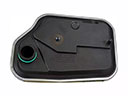 Chevrolet Metro Automatic Transmission Filter
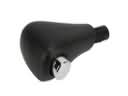 Chevrolet Metro Automatic Transmission Shift Levers
 Chevrolet Metro Automatic Transmission Shifter
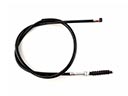 Chevrolet Metro Clutch Cable
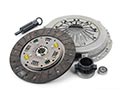 Chevrolet Metro Clutch Disc
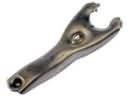 Chevrolet Metro Clutch Fork
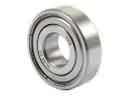 Chevrolet Metro Pilot Bearing
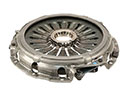 Chevrolet Metro Pressure Plate
 Chevrolet Metro Release Bearing
 Chevrolet Metro Transmission Assembly
 Chevrolet Metro Transmission Pan