ChevyParts
My Garage
My Account
Cart
OEM Chevrolet Metro Fuel Injector
Gas Injector- Select Vehicle by Model
- Select Vehicle by VIN
Select Vehicle by Model
orMake
Model
Year
Select Vehicle by VIN
For the most accurate results, select vehicle by your VIN (Vehicle Identification Number).
2 Fuel Injectors found
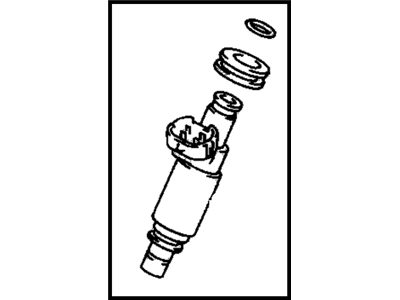
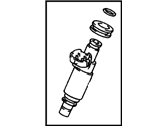
Chevrolet Metro Injector Part Number: 91173903
$7.33 MSRP: $151.93You Save: $144.60 (96%)Ships in 1-2 Business Days
Chevrolet Metro Throttle Body Part Number: 91172108
Chevrolet Metro Fuel Injector
Want to cut long-term maintenance and repair costs? Choose OEM Fuel Injector. Those parts deliver top durability you can trust. On our site, you'll find a huge catalog of genuine Chevrolet Metro parts. Prices are unbeatable, so you can keep more in your pocket. Every OEM Chevrolet Metro Fuel Injector includes a manufacturer's warranty. You can also get an easy return policy that keeps buying risk free. Fast delivery, get your car on the road quickly. It's simple to search, compare, and order. Stop guessing about quality or fit. Order today and save with parts that last.
The Fuel Injector, that is utilized in Chevrolet Metro vehicles for instance, plays an important role of spraying fuel directly into the engine cylinders, so as to have a suitable air fuel balance in order to burn fuel efficiently. This system is governed by the Engine Control Module (ECM) and it is a "returnless" system meaning the number of fuel lines required is significantly low and thus the efficiency is higher. Chevrolet Metro models are equipped with electronic fuel injectors with which you may experience problems including clogging or leakage and will thus lead to poor engine performance and compromised fuel efficiency. Although the overview does not identify various types of fuel injectors offered to choose from with reference to the Metro model line variants needed for different cars, it emphasizes the imperativeness of taking care of those small parts since they can severely harm the engine when damaged. In general, the Fuel Injector is a very important part for the Chevrolet Metro in order to have good performance and durability.
Chevrolet Metro Fuel Injector Parts Questions & Experts Answers
- Q: How to service and repair the fuel injector on Chevrolet Metro?A:Beginning Fuel Injector service requires users to both relieve fuel pressure then disconnect the negative Battery Cable. Detach the PCV Valve and hose from the intake and valve cover area after taking out all 3 bolts and the Intake Manifold brace from the engine's interior. The electrical connectors need detachment from the 4 fuel injectors along with the removal of the vacuum hose from the fuel-pressure regulator. The service requires removal of the fuel feed hose from the Fuel Rail inlet pipe while simultaneously removing the fuel return hose from the Fuel Rail return pipe. Proceed by first removing the two Fuel Rail bolts then taking off the Fuel Rail from the Intake Manifold. Afterward remove the four fuel injectors from the rail. The installation process requires brand new o-rings and grommets on every Fuel Injector followed by light fuel application on the o-rings before placing them in position. The inspection of Fuel Injector cushions should be performed to identify any signs of damage so proper replacements can be made. Position the Fuel Rail alongside 4 fuel injectors using cushions onto the Intake Manifold after securing it with 2 bolts while tightening them to 18-28 n.m (13-20 lb ft). Swipe the fuel injectors for smooth movement before installing the fuel feed hose to the inlet pipe and securing it with clamps followed by connecting the return hose to the outlet pipe. Reinstall the vacuum hose to its fuel-pressure regulator position and reestablish electrical connector connection with fuel injectors. After connecting the Intake Manifold brace to its position with 3 bolts which require 25-35 n.m (18.5-25 lb ft) torque then add the PCV Valve and hose into their respective positions on the intake plenum and valve cover. To complete the procedure return the negative Battery Cable and tighten its terminal retainer to 5.5 n.m (49 lb in). Then turn on the ignition to activate the fuel system and turn it off to inspect for leaks before repairing any damages.
Related Chevrolet Metro Parts
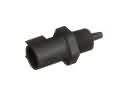 Chevrolet Metro Air Charge Temperature Sensor
 Chevrolet Metro Air Filter Box
 Chevrolet Metro Air Hose
 Chevrolet Metro Air Intake Coupling
 Chevrolet Metro Fuel Pump
 Chevrolet Metro Fuel Pump Gasket
 Chevrolet Metro Fuel Tank Sending Unit
 Chevrolet Metro Idle Control Valve
 Chevrolet Metro Intake Manifold
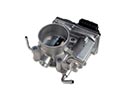 Chevrolet Metro Throttle Body
 Chevrolet Metro Throttle Body Gasket
 Chevrolet Metro Vapor Pressure Sensor