ChevyParts
My Garage
My Account
Cart
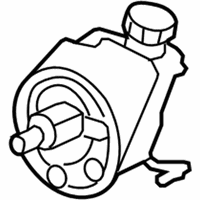
OEM GMC Savana 2500 Power Steering Pump
Power Steering Pump Unit- Select Vehicle by Model
- Select Vehicle by VIN
Select Vehicle by Model
orMake
Model
Year
Select Vehicle by VIN
For the most accurate results, select vehicle by your VIN (Vehicle Identification Number).
10 Power Steering Pumps found
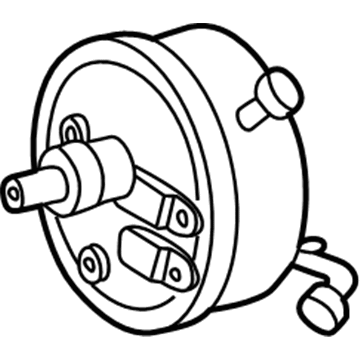
GMC Savana 2500 Power Steering Pump Part Number: 84996212
$446.51 MSRP: $766.86You Save: $320.35 (42%)Ships in 1-2 Business Days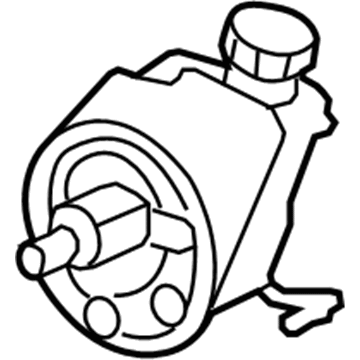
GMC Savana 2500 Power Steering Pump Part Number: 84988713
$220.44 MSRP: $346.85You Save: $126.41 (37%)Ships in 1-2 Business Days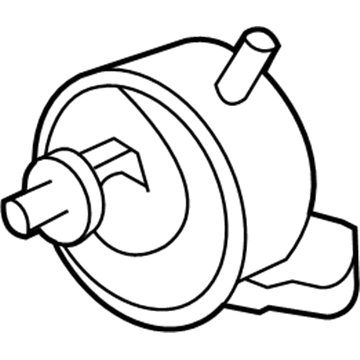
GMC Savana 2500 Power Steering Pump Part Number: 84988712
$231.43 MSRP: $394.01You Save: $162.58 (42%)Ships in 1-2 Business Days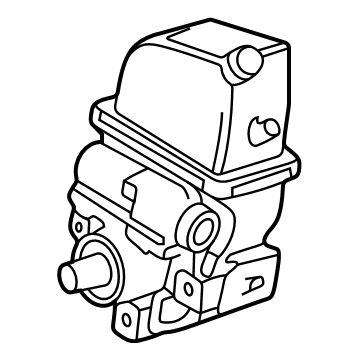
GMC Savana 2500 Power Steering Pump Part Number: 84983793
$185.81 MSRP: $292.37You Save: $106.56 (37%)Ships in 1-3 Business Days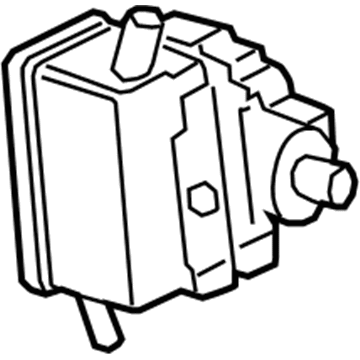
GMC Savana 2500 Power Steering Pump Part Number: 84983792
$181.37 MSRP: $285.37You Save: $104.00 (37%)Ships in 1-3 Business DaysGMC Savana 2500 Power Steering Pump Part Number: 26069070
$446.51 MSRP: $766.86You Save: $320.35 (42%)Ships in 1-2 Business Days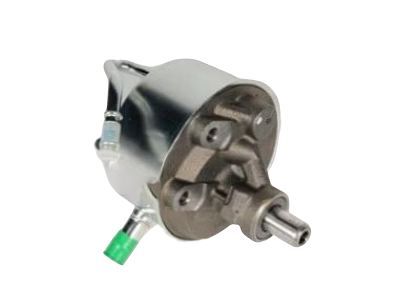
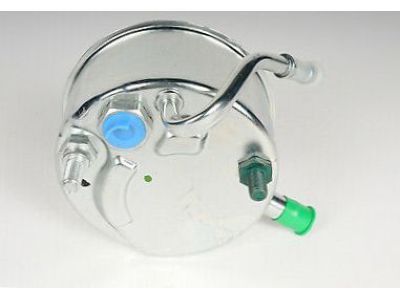
GMC Savana 2500 Power Steering Pump Part Number: 19153684
GMC Savana 2500 Power Steering Pump Part Number: 26040781
GMC Savana 2500 Power Steering Pump Part Number: 26040780
GMC Savana 2500 Power Steering Pump Part Number: 19168953
GMC Savana 2500 Power Steering Pump
Want to cut long-term maintenance and repair costs? Choose OEM Power Steering Pump. Those parts deliver top durability you can trust. On our site, you'll find a huge catalog of genuine GMC Savana 2500 parts. Prices are unbeatable, so you can keep more in your pocket. Every OEM GMC Savana 2500 Power Steering Pump includes a manufacturer's warranty. You can also get an easy return policy that keeps buying risk free. Fast delivery, get your car on the road quickly. It's simple to search, compare, and order. Stop guessing about quality or fit. Order today and save with parts that last.
GMC Savana 2500 Power Steering Pump Parts Questions & Experts Answers
- Q: How to replace the power steering pump (4.8L, 5.3L, 6.0L) on GMC Savana 2500?A:Placing a drain pan underneath the vehicle is crucial before starting to replace the Power Steering Pump on 4.8l, 5.3l, and 6.0l models. The procedure starts by disassembling the lower intermediate shaft to power steering gear retaining bolt before disconnecting the lower intermediate shaft from the power steering gear. Start by elevating then supporting the car before taking off the tire and wheel. The Power Steering Pump installation requires hose disconnect from the reservoir outlet, power steering gear outlet or cooler hose, and power brake booster inlet through the wheel well and using caps to block dirt entry. First lower the vehicle to expose the rear Power Steering Pump bolt which needs removal followed by front mounting bolts until the Power Steering Pump can be removed from the vehicle. Detach the rear bracket from the Power Steering Pump by removing its rear bracket mounting nuts. The Power Steering Pump requires its rear bracket to be attached first using mounting nuts that should be tightened to 50 nm (37 ft. Lbs.). Replace the Power Steering Pump inside the vehicle while fastening the front mounting bolts to 50 nm (37 ft. Lbs.) and the rear mounting bolt to 41 nm (30 ft. Lbs.). You must elevate the vehicle and then confirm that the Power Steering Hoses follow their original path after opening the hose caps. Attach the power brake booster inlet hose at the Power Steering Pump through the wheel well then tighten its fitting to 33 nm (24 ft. Lbs.). The power steering gear outlet hose and cooler hose and reservoir outlet hose must be reconnected from the wheel well opening. The first step entails putting back the tire and wheel before lowering the vehicle where technicians must fasten the lower intermediate shaft to the power steering gear using the 61nm (45 ft. Lbs.) torque setting. Install the Power Steering Pump pulley before bleeding the system and removing the drain pan positioned under the vehicle.
Related GMC Savana 2500 Parts
 GMC Savana 2500 Center Link
 GMC Savana 2500 Drag Link
 GMC Savana 2500 Pitman Arm
 GMC Savana 2500 Power Steering Hose
 GMC Savana 2500 Power Steering Pressure Switch
 GMC Savana 2500 Power Steering Reservoir
 GMC Savana 2500 Rack And Pinion
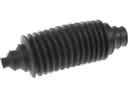 GMC Savana 2500 Rack and Pinion Boot
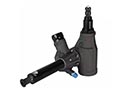 GMC Savana 2500 Steering Gearbox
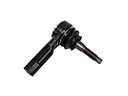 GMC Savana 2500 Tie Rod
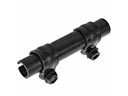 GMC Savana 2500 Tie Rod Adjusting Sleeve
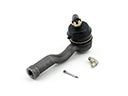 GMC Savana 2500 Tie Rod End